Thursday, April 29, 2010

Why go VEGETARIAN?

Did you know that 500,000 animals are slaughtered every hour just for consumption? And did you know that 100 acres of grain that is used to create enough meat for 20 people could be used to feed 240 people if they just ate the grain instead of feeding it to the animals? People become vegetarians for many different reasons; for health reasons, religious beliefs, animal rights or just a personal choice. Besides becoming vegetarian for animal rights, according to Medical Doctor Willian Castelli, the Director of the Framingham Health Study: National Heart, lung and Blood Institute, being a vegetarian can have tremendously positive effects on your health.

"A low-fat plant-based diet would not only lower the heart attack rate about 85 percent, but would lower the cancer rate 60 percent."

Many people think that if you are a vegetarian, you only eat vegetables. However, vegetarians can have very delicious diets full of variety that greatly benefit the body in many ways.

There are three types of Vegetarians, but in this blog, we will be mainly focusing on being a Lacto-ovovegetarian. When you are a lacto-ovovegetarian, it is easier to get certian nutrients such as calcium and protien, which can be gotten from milk and eggs. Here are the basics of the three kinds of vegetarianisms:

  • Lacto-ovovegetarians don't eat meat, fish (and seafood), or poultry but do eat eggs and dairy products (such as cheese, yogurt and milk) Most vegetarian teens are lacto-ovovegetarians, so you could concider lacto-ovovegetarians the "normal" vegetarian.
  • Lactovegetarians don't eat meat, fish (and seafood), poultry and eggs, but still eat dairy products.
  • Vegans don't eat any animal produtcts, so no meat, fish (and seafood), poultry, eggs, and dairy.
(lacto = milk/ ovo=eggs so, lacto-ovovegetarians eat milk and eggs, lactovegetarians eat milk but not eggs etc.)

If you are interested in many other reasons why to be come a vegetarian, click here.

Sources:
http://www.fcs.uga.edu/pubs/current/FDNS-E-18.html
http://www.giveusahome.co.uk/articles/vegetarianism.htm
http://www.vegsource.com/harris/cancer_vegdiet.htm
http://www.dfwnetmall.com/veg/yourfoodandyourhealth.htm
http://www.pamf.org/teen/health/nutrition/veggieteens.html
http://cache2.asset-cache.net/xc/91846963.jpg?v=1&c=IWSAsset&k=2&d=91F5CCEF208281FD1C264EB5D75C56659C019FFDFFDAFFCFD573C93EF80B59AD
http://mumszine.files.wordpress.com/2009/11/vegetarian-diet.jpg


Importance of Healthy Eating

Why Eat healthy?
•Provides vitamins, minerals and nutrition your body needs
•It keeps your muscles and immune system strong
•Can help teens to grow and develop and maintain a healthy weight
•Supplies body with the needed amount of energy all day
-Using a food pyramid as a guideline can help you make healthy decisions!
As you can see, meat makes up only a small part of the pyramid, therefore it can be easily replaced by beans or other healthy forms of protein to maintain a healthy diet.


Our bodies repair and rebuild themselves by taking energy and nutrients from the foods we eat. The food choices we make can even effect our emotions and out thoughts! When we make good food choices, our overall health levels are affected.

Here are some main reasons to eat healthy:

1. Energy
Our bodies have more access to energy when the foods we eat are easier to digest. When our diets are healthy, the more energy we have. Sugar and caffeine only give our bodies temporary boosts of energy, because soon they crave more. Eating the right foods can give you energy that will last long, and be good for your body too!

2. Diseases
The condition of our immune systems depends on the foods we eat as well. If the food you are consuming doesn't provide enough nutrients, your body will take it from its reserves. This would cause vital vitamins, minerals and antioxidants to be diminished, leaving our bodies more vulnerable to disease and infection.
*read more on the risk factors of an unhealthy diet here

3. Appearance and Feelings
When we eat unhealthy foods, the digestion process is strained. This could cause our bodies to feel uncomfortable (ex. tiredness, lightheadedness, etc.) Also, skin, hair, nails, etc are affected by our eating habits. In order to keep these healthy, vitamins, minerals, antioxidants, fatty acids are required. Making good food choices can help keep every aspect of our bodies healthy, including our weight.
*read more on what foods you can eat to have healthier hair here

Sources
http://www.thelifeco.com/cok-okunanlar.aspx?id=478
http://www.vegsoc.org/news/2000/21cv/pyramid.jpg
http://watchmojo.com/blogs/images/calories.jpg

Caloric Requirements

In teens, many factors will affect the amount of calories you should and need per day. Your gender, age, weight, height, activity levels and much more will affect the number of calories you should be eating, so how will you know how much to take in per day?

First of all, a calorie is the amount of energy required to raise the temperature of 1 gram of water 1 degree centigrade. Different foods can and will contain different amounts of energy, which is why a scoop of peanut butter will have more calories than a similar sized carrot.

For vegetarian teenage girls, 1,800 - 2,200 calories should be consumed daily. For vegetarian teenage boys, 2,300 - 2,700 is the caloric requirements. You can use calorie calculators, like the one here, to find a more specific measurement about the number of calories you should intake daily.

If a teenager were to consume to many calories, it can lead to excessive weight gain. Only 3,500 extra calories can make you gain a whole pound! The reversed is also the same. However, it is not good for a teenager to limit their calorie intake. A teenager needs the calories so that their body can grow and develop. Limiting calories will affect the teen's maturation process. Calorie intake should never be lower than 1,200 calories daily for women and 1,500 for men.

Sources
http://diet.lovetoknow.com/wiki/Healthy_Diet_for_Teenagers
http://health.nytimes.com/health/guides/nutrition/diet-calories/overview.html
http://www.weightlossforall.com/calories-restriction.htm
http://www.eatindianfood.com/images/Eating-Healthy-diet-Food-Gives-Nutrition-Within-Calories.jpg

Importance of Carbs, Fats, and Protein

Carbohydrates, proteins and fats are important macro nutrients for a teen vegetarian. However, you must be careful both to meet but not exceed the daily requirements of these nutrients. Besides the main macro nutrients, a vegetarian teen must make sure that they also get enough of all the other nutrients their body needs.
Here is a breakdown of each of these macro nutrients, carbohydrates, fats and proteins.

Carbohydrates:
What they are made out of: Sugars (like glycogen and glucose)
What they do: Principal source of energy
How much do you need:
55-60% of calories should come from complex carbs

There are three main types of carbohydrates: complex carbs (starches), simple sugars (simple carbs), and dietary fiber. Simple carbs are found in milk, fruit, table sugar, etc. Refined sugar is not good for vegetarians as it doesn't give much nutrition with the calories. Complex carbs are in cereals and grains, such as bread, rice, pasta, oats, barley, rye, buckwheat, etc. They are also found in some vegetables such as parsnips and potatoes. A vegetarian needs a lot of complex carbs because they benefit health, energy and weight levels. Less refined complex carbs are best because they contain B vitamins and dietary fibre. Finally, dietary fiber or celluose is the indigestible part of carbohydrate foods. It is found in unrefined cereals, grains, fruits or vegetables. Dietary fiber is good for you because it reduces the risk of digestive problems and diseases like colon cancer and diverticular disease.


Fats:
What they are made out of: fatty acids, glycerol (group of lipids)
What they do: Serve as a storage substance for body's extra calories; Energy; Helps body absorb and move vitamins through bloodstream; Healthy skin and hair
How much do you need: Limit total fat intake to less than 25-35% of total calories (limit saturated fat to less than 7% of total; limit trans fat to less than 1% of total; limit unsaturated fat to less than 1 tablespoon daily)

Saturated or Unsaturated?
Fatty acids can be saturated and unsaturated in food. The difference between the two depends on their bonds; whether or not there is room on the fat molecule for more hydrogen to bond to it. Saturated have no room on the molecule for additional hydrogen: that's why it's called saturated. Unsaturated fats have room for the additional hydrogen.

Saturated:
Saturated fats are primarily found in animal products.(i.e. lard, poultry fat, butter) Foods from plants that contain saturated fat include coconut, palm oil, cocoa butter etc.
Saturated fats clog our arteries and raise LDL cholesterol.

Unsaturated:
Unsaturated fats are primarily found in plant products. (i.e. vegetable oils such as peanut, canola) Unsaturated fats have been shown to reduce cholesterol levels. Monounsaturated fats and polyunsaturated fats are two types of unsaturated fats. Monounsaturated fats lower LDL, known as the bad cholesterol and maintain HDL, known as the good cholesterol. Polyunsaturated fats reduce the levels of LDL cholesterol, but too much may lower the HDL. Trans fats are actually unsaturated fats, but they can raise total and LDL (bad) cholesterol levels and lower HDL (good) cholesterol.


Essential Fatty Acids:
-are fatty acids that we must eat because our bodies can't make them and the body needs it
-used to produce hormone-like substances that regulate a wide range of functions

Using fats as energy:
1. Broken down in body to release glycerol and free fatty acids
2. Glycerol --> glucose by liver then used as energy

Healthy food sources of fat are foods with the essential fatty acids. Good sources of this include cold-water fish, flax seed, soy and walnuts. (These all contain omega-3 fatty acids.) These sources of fats helps our immune system and reduces the risk fo coronary heart disease.


Proteins:
What they are made out of: Amino Acids
What they do: Keep bones strong
How much you need each day: 45g-60g
Where you can get protein: beans, nuts, nut butters, soy products, and many others

About COMPLETE PROTEINS!
A complete protein is when you eat foods with the right combination of amino acids to create a protein. When you eat certain foods together, you make the right combination to get a complete protein.
Examples of complete proteins:
  • Peanut butter on whole wheat toast
  • Red beans and rice
  • Chickpeas and couscous
  • Falafel and pita bread
http://www.thedailygreen.com/media/cm/thedailygreen/images/peanut-butter-breakfast-lg.jpg

http://www.thedailygreen.com/media/cm/thedailygreen/images/peanut-butter-breakfast-lg.jpg
http://www.wingyipstore.co.uk/pictures/content1441/beancurd+tofu+soft+and+firm.jpg
http://www.vegetarian-diet.info/vegetarian-diet-carbohydrates.htm

Foods to Avoid

Making Decisions For A Healthier Teen:
When it comes to a broccoli or a donut, who wouldn't want the donut? :) BUT, you must think again. There are many foods out there that teens should limit or avoid.
•Foods with trans-fat (LIMIT OR AVOID; i.e. creamy frosting, deep-fried french fries, twinkies): Trans fats are made by a chemical process called hydrogenation. It is a chemical process where liquid oils are changed into solid fats. The more solid the fat, the more it clogs the arteries. Eating too much is one of the major risk factors for heart disease. Trans-fat also adds to the risk of cardiovascular disease.
(Interesting fact: The dish with the most trans fat that is served here in Hawaii is KFC's Chicken Pot Pie with 14 grams of trans fat! Remember that you should keep trans fat intake to less than 1% of total calories and on a 2,000 calorie diet, that is consuming less than 2 grams!)
Learn more about trans-fat and why companies use trans-fat in their products!

•On a less serious note shark, swordfish and marlin should be LIMITED OR AVOIDED: These fish contain high levels of mercury because they are at the top of the food chain and the level of mercury increases up the food chain. (This is known as biological magnification.) The high levels of mercury, may affect teens' developing nervous system.

•Foods with lots of salt (LIMIT; i.e. anchovies, bacon): Teens should only be eating about 6g of salt a day and that is only about a teaspoonful! Eating less sodium reduces blood pressure. Cutting back on salt could lower your blood pressure in just 4 weeks! When your blood pressure goes down, the risk of getting heart disease and stroke goes down as well! If this all doesn't interest you because you need your salty food, then you will love to hear this: you may notice that you will have a wider range of flavors in food because your taste buds are adjusting!

Wednesday, April 21, 2010

3-Day Vegetarian Meal Plan

Day One: Breakfast
-Two slices of toasted wheat bread with low-sodium peanut butter
-
low-fat skim milk
-A cup of sliced strawberries and blueberries, fresh

Day One: Lunch
-Veggie wrap on whole wheat wrap with lettuce, cheddar cheese, grated carrots and hummus
-water
-Home-made granola with toasted oats, almonds, pecans and raisins

Day One: Snack
-Half a cup of (frozen) grapes
-Lightly salted (0r un-salted) sunflower seeds
-water

Day One: Dinner
-Toasted pine nut & vegetable couscous (green lentils, pine nuts and vegetables [zucchini, tomatoes, artichokes and onions] sautéd in olive oil served over wheat couscous)
-100% pomegranate/acaí berry juice
-Dessert: One serving of chocolate tofu pudding

Day Two: Breakfast

- One bowl of plain low-fat yogurt with home made granola
-a serving of cantaloupe
-orange juice


Day Two: Lunch
-A baked potato (with butter, cheese and sour cream)
-tofu salad (lettuce, cucumbers, tangerines, chopped pecans, tofu and crasins)
-chocolate milk

Day Two: Snack
-triscuts with cheddar cheese
-water
-an orange


Day Two: Dinner
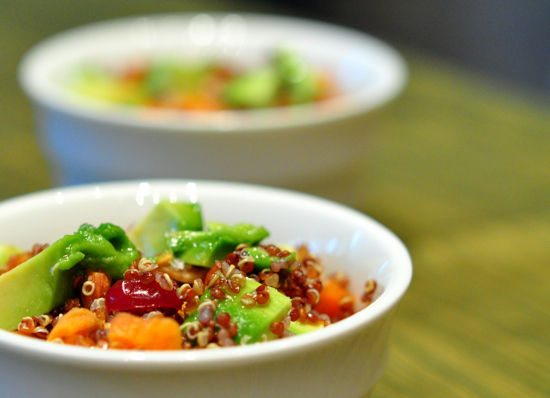
-quinoa salad (cooked quinoa, bell peppers, carrots and celery)
-whole wheat bread with butter
- 100% apple juice
-Dessert: carrot cake muffin

Day Three: Breakfast
-Oatmeal (oats cooked in the microwave with nuts, fruit, and a little brown sugar on top)
-grapefruit
-low-fat milk

Day Three: Lunch
-falafel with pita breads and hummus
-carrot sticks
-baked chips
-water


Day Three: Snack
-apples with peanut butter and raisins
-chocolate milk

Day Three: Dinner
-spaghetti with sauce (tomato paste, herbs, peppers, onions, garlic, celery and carrots)
-sourdough bread with butter
-salad (lettuce, cucumbers etc.)
-water
-dessert: oatmeal cookies


http://media.onsugar.com/files/2010/01/04/1/192/1922195/b37e0215353156c1_Quinoa_Salad.jpg
http://www.falafelrepublic.com/images/falafel-pita-lg.jpg
http://farm4.static.flickr.com/3300/3418588510_c82d8aaa89.jpg

http://www.stclouddeli.com/yahoo_site_admin/assets/images/wrap.31174325.jpeg